
 OVERVIEW
 OVERVIEW
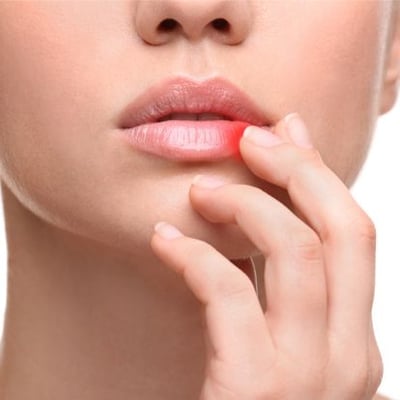
A cold sore is a blister or a cluster of blisters that typically form on or around the lips and mouth. The condition is commonly referred to as herpes, herpes simplex labialis, or fever blisters. It is a life-long condition, and affected people experience recurrent outbreaks of blisters from time to time.
Cold sores, or herpes, are extremely common. It is caused by an infection by the herpes simplex virus. It is estimated that more than half of people are infected with the virus, which causes cold sores, by the time they become adults. There are two types of the herpes simplex virus- herpes simplex virus type 1 (HSV-1) and herpes simplex virus type 2 (HSV-2). In children, HSV-1 is usually responsible for causing cold sores around the mouth. Classically, HSV-2 is thought to be the cause of genital herpes. However, HSV-1 and HSV-2 can cause blisters and sores on any body part.
What are the Symptoms of a Cold Sore?
For many people, infection with the herpes simplex virus can be completely asymptomatic with no symptoms whatsoever. However, in others, it can manifest with the following symptoms:
- Patients often report a tingling, burning, or itching sensation before the outbreak.
- Painful blisters then appear. Classically, the blisters are around the lips or mouth, but they can also appear on other body parts, such as the nose, cheeks, or chin.
- After a few days, the blisters pop and develop into open sores that crust over and heal.
- Healing and resolution of the outbreak usually occur in 1-2 weeks.
- The first outbreak following the initial infection is usually the most severe. In addition to painful blisters, patients can feel ill and experience fever, headaches, body aches, and swollen lymph nodes.
- Subsequent breakouts tend to be less severe and more mild.
- Common triggers that cause outbreaks include: sunlight, fever, physical injury, surgery, hormonal fluctuations, suppression of the immune system, or stress.
How Are Cold Sores Transmitted?
Cold sores are highly contagious. The virus can spread through saliva, skin-to-skin contact, or touching an object handled by someone infected. Although transmission is most likely when the infected person has an active sore, the virus can also be passed on even if the infected person is asymptomatic.
Simple measures to decrease the spread of the virus include:
- Don’t share food, beverages, or eating utensils.
- Don’t share personal items like lip balms, razors, and towels.
- Wash your hands frequently throughout the day.
- Do not touch any of the blisters or sores of an infected person.
- Avoid kissing or skin-to-skin contact with people while blisters are present.
Diagnosing a Cold Sore
During an active outbreak, a dermatologist can often diagnose herpes simplex infection by examining the affected areas. The diagnosis can be confirmed by taking a swab from the sore and sending it to a laboratory to detect the presence of HSV-1 and/or HSV-2. If you do not have an active outbreak, your provider may perform blood work to look for past infections with HSV-1 or HSV-2.
Treatment Options for Cold Sores
Infection with the herpes simplex virus is life-long. While no cure exists, treatments are available to speed up healing and control outbreaks. Antiviral medications are available both as topical creams and oral pills. Examples include: acyclovir, valacyclovir, famciclovir, and penciclovir. In general, oral pills are more effective at treating cold sores than topical creams. Depending on the frequency and severity of the condition, oral medications can be taken episodically (at the first sign of an outbreak) or daily to suppress future breakouts.
Home remedies and over-the-counter treatments are also available to treat the uncomfortable symptoms of a cold sore. Examples include:
- Applying ice or warm compresses to the site to ease discomfort
- Applying petroleum jelly to the open sores
- Avoiding foods that cause pain and discomfort, such as acidic foods, citrus fruits, salty foods, or spicy foods
- OTC pain medications such as acetaminophen or ibuprofen
It is also helpful to avoid and limit triggers that cause flares. Examples include wearing sunscreen and considering pre-medication with an oral medication before dental work and procedures.
Complications of Cold Sores
Cold sores seldom lead to complications. In most cases, cold sores resolve independently, even without treatment. There are certain circumstances where the infection can have more serious consequences and require prompt medical attention. Examples include:
- Infections near the eye. Herpes infections can spread to the eyes and cause HSV keratitis.
- Infections in babies under 6 months of age. Young babies do not have well-developed immune systems and can be susceptible to more serious infections.
- Infections in people with poorly controlled eczema. People who suffer from eczema can have tiny breaks and cracks in their skin. These tiny breaks and cracks can become easy entry points for the herpes simplex virus, thereby causing severe, widespread infections.



